
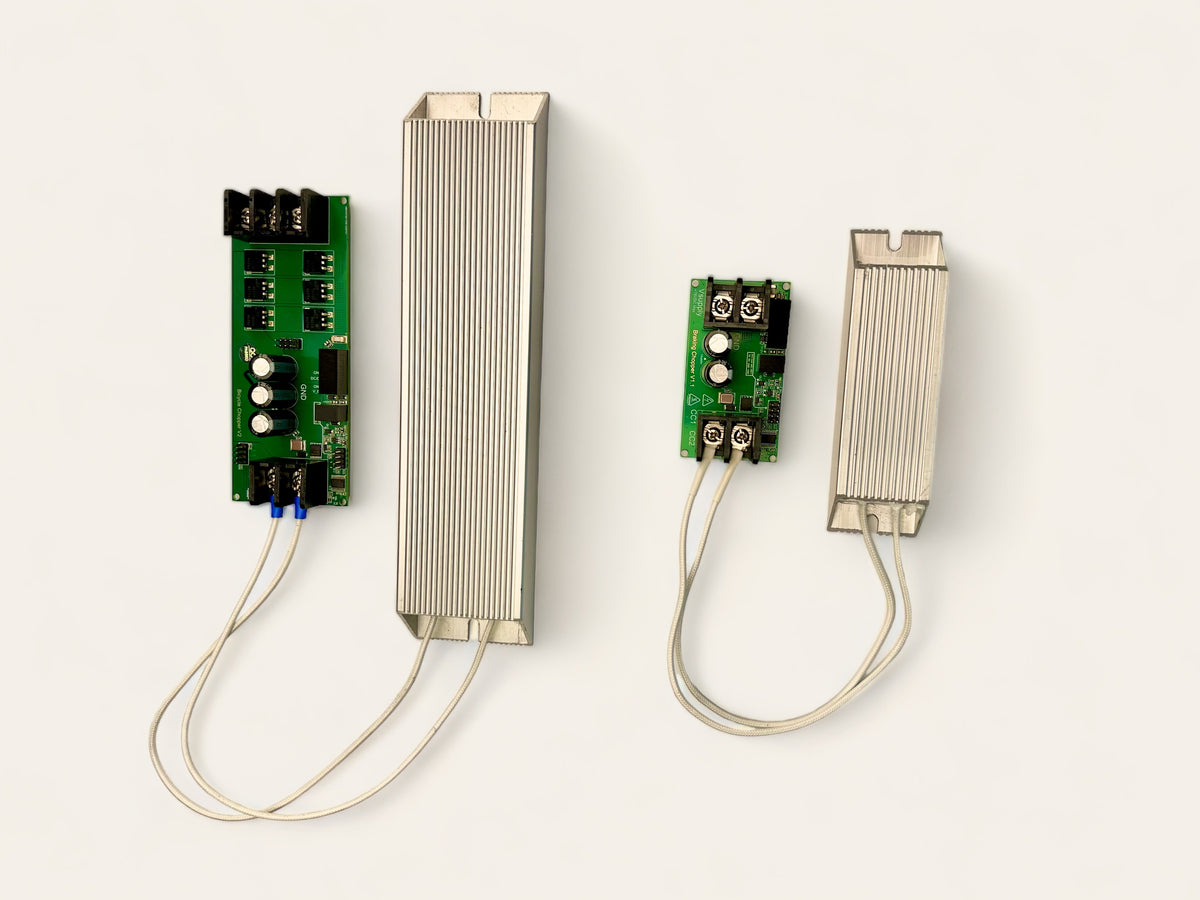
Overview
A braking chopper is used to manage the excess energy generated during the deceleration or braking of electric drives, such as motors in elevators, conveyor belts, or machine tools. Normally, this energy is fed back into the DC link of the frequency inverter. However, if the DC link reaches its maximum voltage limit, the excess energy must be dissipated to prevent damage to the inverter or connected equipment.
This is where the braking chopper comes in. It converts the excess electrical energy into heat, which is then safely dissipated. This is particularly important in applications where frequent or rapid braking is required, or when the motor is driven as a generator in servo operation.
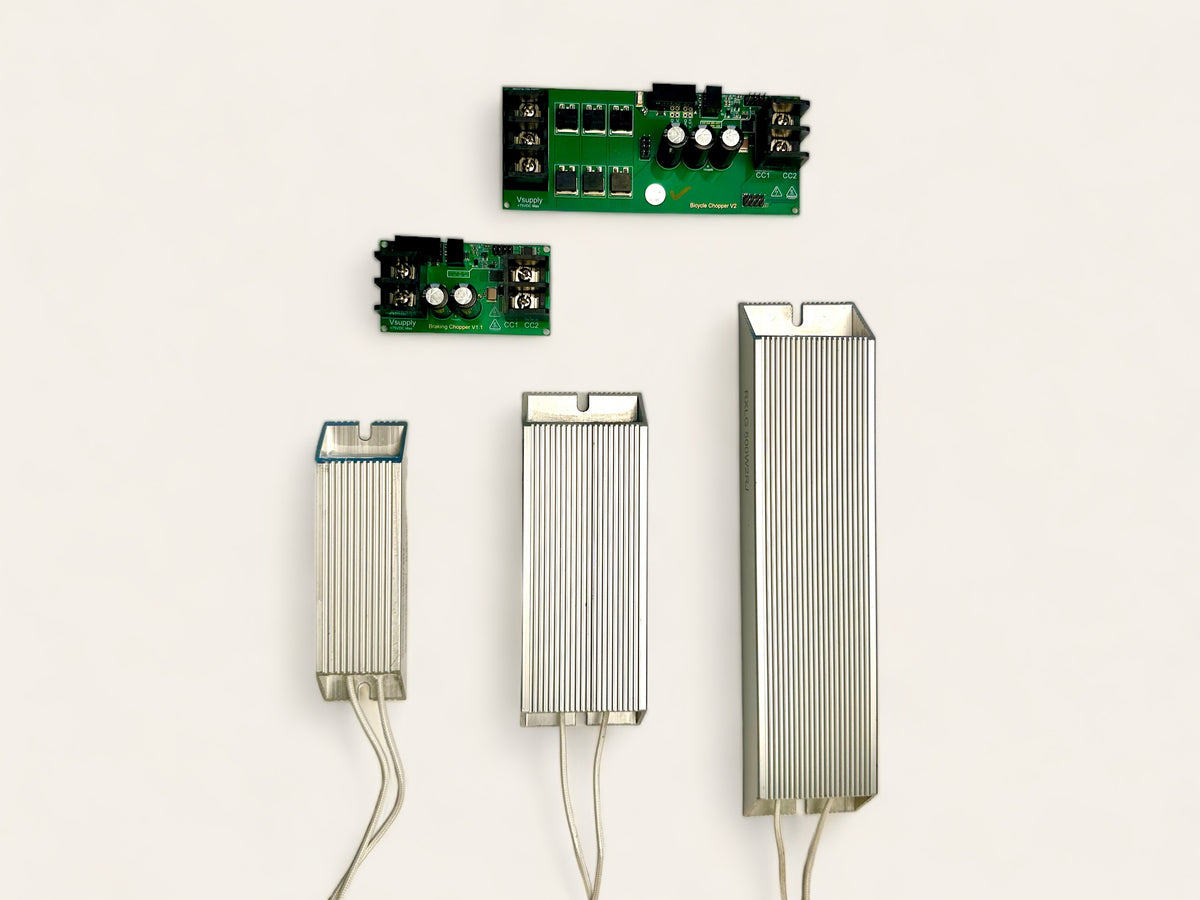
Universally retrofittable brake choppers
We offer "fully customizable" brake chopper solutions that connect directly to the DC link without an additional power supply, enabling easy (retrospective) integration into existing systems.
Universally retrofittable brake choppers
We offer "fully customizable" brake chopper solutions that connect directly to the DC link without an additional power supply, enabling easy (retrospective) integration into existing systems.
Features
Adaptable to your specifications
Upgradeable
Freely programmable behavior
Provides reliable surge protection
Product Variants
Low-voltage Brake Chopper
- 12-75 VDC
- 100 W to 2 kW continuous
- 1-10 kW peak
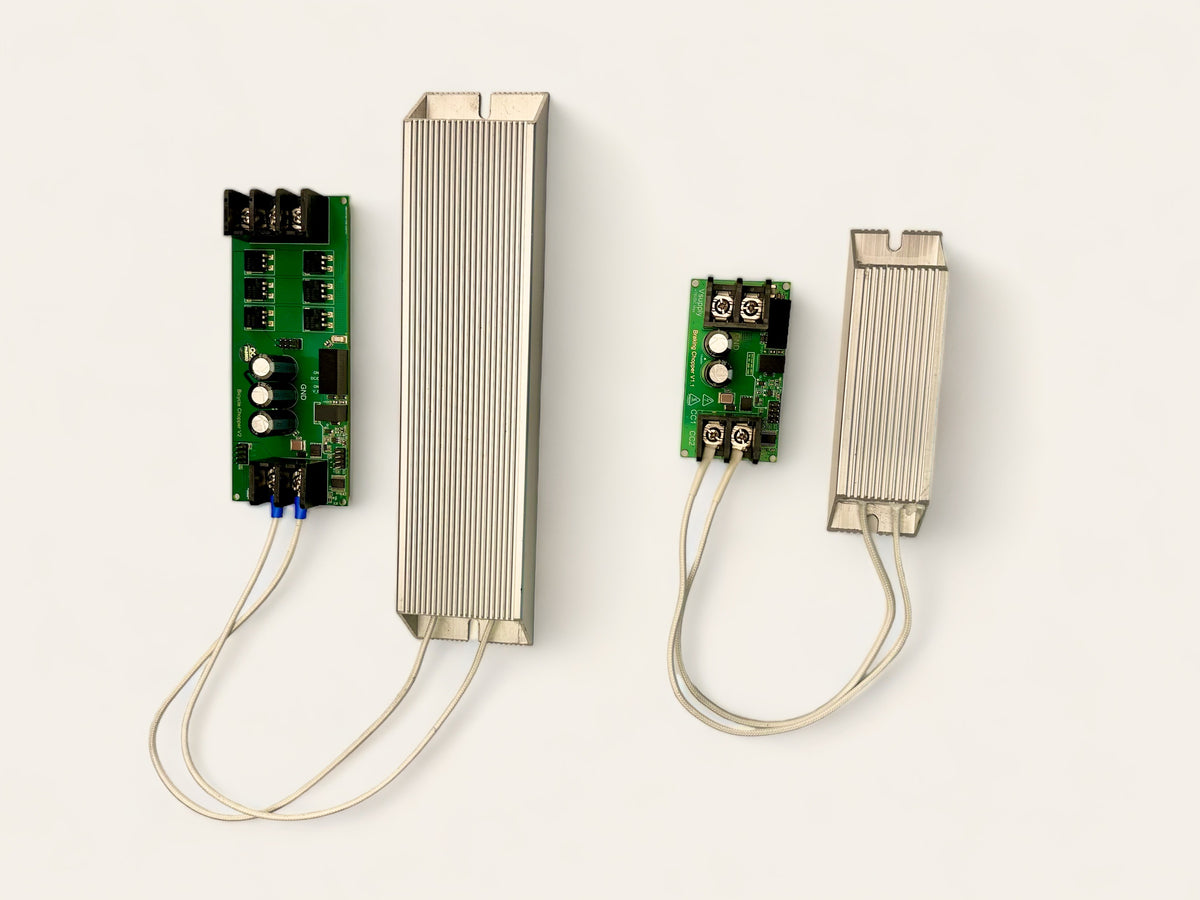
Low-Voltage Braking Chopper
- 80-650 VDC
- 100 W to 2 kW continuous
- 1-10 kW peak
Applications
Frequent braking
- (e.g. when changing direction)
Conveyor Technology, Lifts
- Lifting and linear drives, vehicles and fitness equipment
Retrofitting existing frequency converters
- without braking chopper
Energy recovery
Your project
Let's talk about your project
Whether you just have an idea or your product is already on the market and you need troubleshooting, give us a call or send an email. We usually respond within one business day.